Square FRP Cooling Towers in Delhi: Benefits, Applications, and Selection Guide
Industries across Delhi and the wider NCR region rely on dependable cooling systems to maintain equipment performance and control process temperatures. Among the available options, Square FRP cooling towers in Delhi offer a practical combination of corrosion resistance, structural strength, efficient heat rejection, and relatively simple maintenance. However, choosing Ice Drop Cooling Towers requires more than comparing size or price. This guide explains how square FRP cooling towers work, where they are used, their major advantages, and the key factors businesses should consider before selecting a suitable model.
For faster information, direct chat with us on WhatsApp.
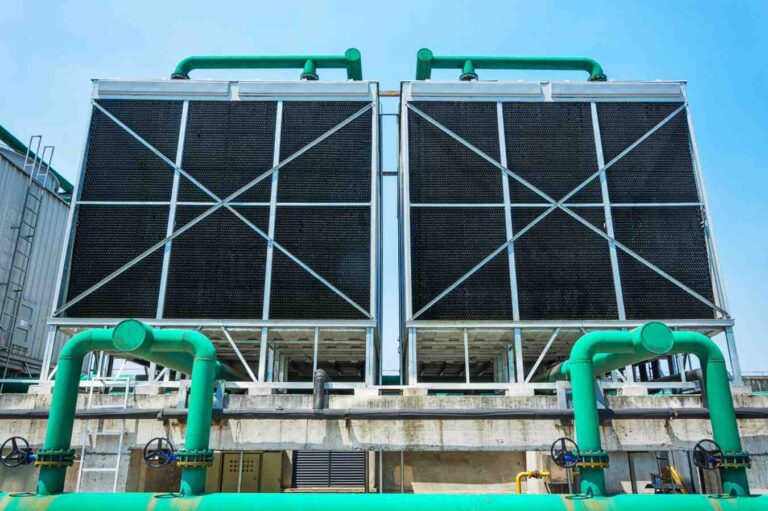
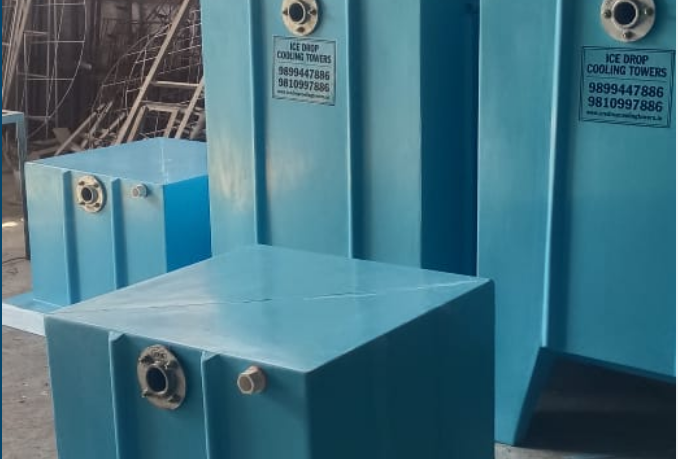
Square FRP cooling towers are industrial heat-rejection systems designed to reduce the temperature of circulating water through evaporation and air movement. Their corrosion-resistant FRP construction, compact square design, durability, and suitability for different industrial applications make them a practical cooling solution for manufacturing plants, HVAC systems, process industries, and commercial facilities in Delhi and NCR.
What Are Square FRP Cooling Towers?
A cooling tower removes unwanted heat from warm circulating water and releases that heat into the atmosphere. In a typical evaporative cooling tower, hot water enters the tower, spreads over the fill material, and comes into contact with moving air. A small portion of the water evaporates, carrying heat away and lowering the temperature of the remaining water.
FRP, or Fibre Reinforced Plastic, is commonly used for cooling tower components because it combines a relatively low structural weight with good resistance to corrosion and moisture.
The square configuration provides a practical footprint for many industrial installations. Depending on the design, towers can incorporate components such as:
- FRP casing and structural components
- Cooling tower fill
- Spray nozzles or water distribution systems
- Axial-flow fan and motor assembly
- Drift eliminators
- Water collection basin
- Supporting structure
- Access and maintenance provisions
The exact configuration should match the required cooling capacity and operating conditions rather than relying only on nominal tower size.
Why Choose Square FRP Cooling Towers in Delhi?
Delhi’s industrial environment can expose cooling equipment to dust, humidity, temperature variations, and demanding operating conditions. Therefore, material selection plays an important role in cooling tower performance.
1. Corrosion Resistance
One of the key benefits of FRP is its resistance to corrosion. Unlike conventional metallic materials that may require additional protection against rust, properly selected FRP components can withstand moisture and many common environmental conditions effectively.
This can make FRP particularly useful where long-term exposure to water is unavoidable.
2. Efficient Heat Rejection
Cooling performance depends on several factors, including airflow, water flow, fill design, ambient wet-bulb temperature, and approach temperature. A correctly designed square FRP cooling tower can provide effective heat transfer while maintaining the required process-water temperature.
However, efficiency should always be evaluated against the actual operating conditions rather than relying solely on general capacity claims.
3. Durable Construction
Quality FRP construction can withstand continuous exposure to moisture and industrial environments. Properly manufactured components can also reduce concerns associated with corrosion-related deterioration.
Routine inspection remains important because no cooling tower material is completely maintenance-free.
4. Practical Installation and Maintenance
Square cooling towers can provide a convenient layout for industrial sites where available floor space needs to be used efficiently. In addition, accessible components can simplify inspection, cleaning, fan maintenance, and water-distribution checks.
5. Suitability for Different Industries
FRP cooling towers can serve a wide range of applications. Their suitability depends on the required cooling capacity, water quality, process conditions, and site environment.
Common Applications of Square FRP Cooling Towers
Square FRP cooling towers can be used wherever circulating water needs controlled heat rejection. Common applications include:
- Manufacturing and process industries
- HVAC and central cooling systems
- Plastic processing facilities
- Chemical and pharmaceutical plants
- Power and utility-related applications
- Food and beverage processing
- Injection moulding and extrusion units
- Commercial and institutional cooling systems
- Machinery and process equipment cooling
For example, manufacturing equipment may generate significant heat during continuous operation. A properly selected cooling tower can help maintain the required water temperature and support stable equipment operation.
How to Select the Right Square FRP Cooling Tower
Selecting a cooling tower based only on its physical dimensions can lead to poor performance. Instead, businesses should assess the complete operating requirement.
Determine the Required Cooling Capacity
Start by identifying the heat load that the tower needs to reject. Cooling capacity is influenced by the circulating water flow rate and the difference between entering and leaving water temperatures.
A qualified supplier should evaluate the actual process conditions before recommending a model.
Consider Delhi’s Ambient Conditions
Cooling tower performance depends heavily on the ambient wet-bulb temperature. Delhi experiences substantial seasonal temperature variations, so design conditions should reflect the intended operating period.
A tower selected without considering local climatic conditions may not deliver the expected leaving-water temperature during demanding periods.
Evaluate Water Quality
Water chemistry can affect fill material, nozzles, basins, and other components. High mineral content, suspended solids, biological growth, and inadequate treatment can contribute to scaling, fouling, or blockages.
Therefore, water treatment and regular blowdown should form part of the overall cooling tower strategy.
Check Fan and Motor Requirements
The fan system directly affects airflow and energy consumption. Businesses should consider fan diameter, motor capacity, operating speed, noise, and accessibility for maintenance.
Energy efficiency matters particularly for cooling towers that operate for long hours throughout the year.
Assess Available Space
Before installation, evaluate the available footprint, airflow clearance, access routes, piping arrangement, electrical connections, and maintenance space. The tower should also have adequate clearance to avoid restricting air intake or discharge.
Maintenance Practices That Support Long-Term Performance
Even a high-quality FRP cooling tower requires regular attention. A practical maintenance program should include:
- Inspecting and cleaning the water distribution system
- Checking fill material for fouling or physical damage
- Inspecting fan blades and drive components
- Monitoring motor condition and vibration
- Cleaning the basin periodically
- Checking drift eliminators and nozzles
- Monitoring water chemistry
- Managing scale and biological growth
- Inspecting structural components and fasteners
Preventive maintenance can identify developing problems before they result in significant downtime or expensive repairs.
Why Work With an Experienced Cooling Tower Supplier?
A cooling tower is not simply a large fan over a water basin. Its performance depends on the interaction between heat load, water circulation, airflow, fill characteristics, ambient conditions, and water treatment.
Therefore, an experienced cooling tower manufacturer or supplier can help evaluate the application and recommend an appropriate configuration. For businesses searching for Square FRP cooling towers in Delhi, it is sensible to compare technical specifications, manufacturing quality, service support, warranty terms, and expected operating requirements rather than choosing solely on the lowest initial cost.
Conclusion
Choosing the right cooling tower can directly influence process stability, equipment performance, energy consumption, and maintenance requirements. Square FRP cooling towers in Delhi can be a practical choice for industries that need reliable heat rejection along with corrosion-resistant construction and manageable maintenance. However, the best tower depends on factors such as cooling load, water flow, temperature range, wet-bulb conditions, water quality, airflow, available space, and operating schedule. Businesses should therefore assess their complete cooling requirement before selecting a model. If you are evaluating an FRP cooling solution for a facility in Delhi or NCR, discuss your operating conditions with an experienced cooling tower supplier to identify a configuration suited to your application.