How to Choose the Right FRP Cooling Tower in Ghaziabad for Your Industry
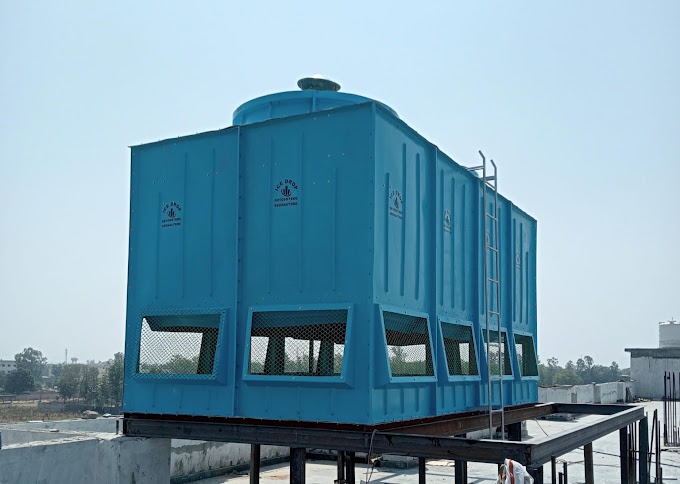
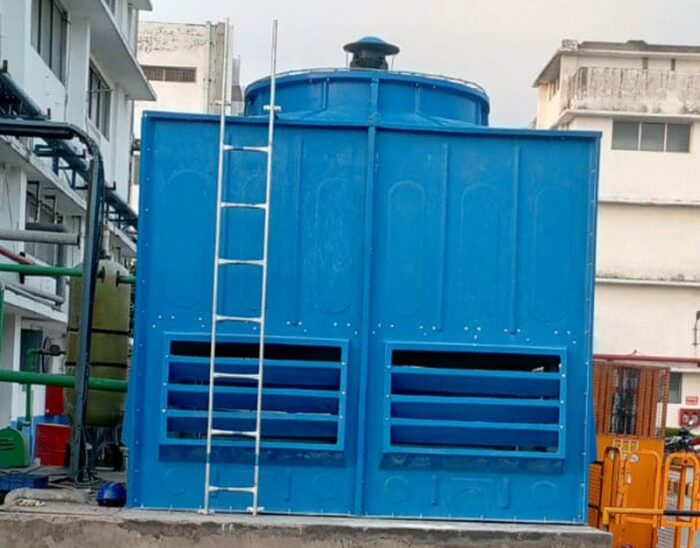
Choosing the right cooling tower is an important decision for industries that depend on reliable heat rejection and controlled process temperatures. FRP Cooling Towers in Ghaziabad are used across different industrial applications because fibre-reinforced plastic offers useful characteristics such as corrosion resistance, relatively low maintenance requirements, and design flexibility. However, the right model depends on much more than the material alone. Before selecting a tower, businesses should evaluate their cooling requirement, water flow, temperature range, operating conditions, installation space, and maintenance expectations. A properly matched system can support consistent cooling performance and efficient plant operation.
For faster information, direct chat with us on WhatsApp.
The right FRP cooling tower should be selected according to heat load, circulating water flow, inlet and outlet water temperatures, ambient conditions, installation space, water quality, and operating requirements. Industries should also evaluate tower construction, fan and motor specifications, maintenance access, spare-parts availability, and supplier support before making a purchase.
Why FRP Cooling Towers Are Used in Industry
Cooling towers remove unwanted heat from circulating water and release it into the atmosphere. They are commonly integrated into industrial processes where equipment, machinery, condensers, or process systems generate heat.
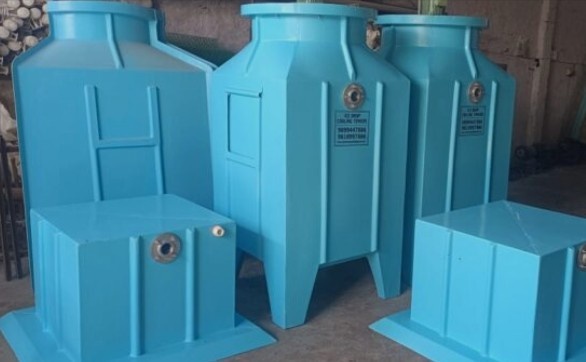
FRP, or fibre-reinforced plastic, is a composite material made by combining a polymer resin with reinforcing fibres. Its properties make it suitable for environments where moisture and corrosion can be concerns.
Depending on the application, an FRP cooling tower may be considered for:
- Manufacturing plants
- HVAC and process cooling systems
- Chemical and process industries
- Power-related applications
- Plastic and injection-moulding operations
- Food and beverage facilities
- Industrial machinery cooling
The important point is that cooling towers should be selected based on the actual operating requirement rather than simply choosing a model based on size or appearance.
Key Factors to Consider When Choosing FRP Cooling Towers in Ghaziabad
1. Determine the Required Cooling Capacity
Start by identifying the amount of heat that the tower needs to reject. Cooling capacity is closely related to the quantity of circulating water and the temperature difference between the hot water entering the tower and the cooled water leaving it.
A supplier or cooling-system specialist can use these operating parameters to determine the appropriate tower capacity. Choosing an undersized tower may result in inadequate cooling, while excessive capacity can increase the initial cost and physical footprint.
2. Check Water Flow and Temperature Requirements
Water flow rate is another critical selection parameter. The tower should be capable of handling the required circulating-water volume under actual operating conditions.
You should provide the supplier with information such as:
- Hot-water inlet temperature
- Desired cold-water outlet temperature
- Circulating-water flow rate
- Expected heat load
- Operating hours
- Seasonal operating conditions
These details help create a more suitable cooling tower specification instead of relying on a generic capacity estimate.
3. Consider Ghaziabad’s Operating Environment
Local environmental conditions can influence cooling tower performance. Ambient temperature, humidity, airflow, water quality, and installation surroundings should all be considered during selection.
For industrial facilities in and around Ghaziabad, the available installation area and surrounding equipment also matter. The tower needs adequate airflow around its air intake and discharge areas, while maintenance personnel should have safe access to relevant components.
4. Evaluate the FRP Construction
One of the main reasons industries consider FRP cooling towers is the material’s resistance to moisture and many corrosive environments.
However, buyers should look beyond the term “FRP” and ask about the actual construction. Important considerations include the quality and thickness of FRP components, structural design, resin system, fasteners, hardware, and internal components.
A well-designed tower should also provide practical access for inspection and maintenance.
5. Select the Appropriate Fan and Motor
In forced-draft or induced-draft cooling towers, the fan and motor play a major role in moving air through the system.
When comparing cooling tower models, consider:
- Fan diameter and design
- Motor power
- Airflow requirements
- Operating speed
- Energy consumption
- Noise considerations
- Ease of maintenance
The fan and motor should be matched to the tower’s airflow requirement rather than selected independently.
6. Examine Fill and Water Distribution Systems
The fill provides a large contact area between water and moving air, helping heat transfer take place. Its design and material should be suitable for the operating water conditions.
The water distribution system also deserves attention. Proper distribution helps spread water across the fill area and supports consistent cooling.
Ask about fill type, nozzle design, accessibility, and replacement requirements when evaluating different cooling tower options.
7. Consider Water Quality and Maintenance
Cooling tower performance can be affected by scale, biological growth, suspended solids, and corrosion. Therefore, water treatment and routine maintenance are essential parts of a cooling system.
Before purchasing a tower, consider how easily you can inspect and clean:
- Fill material
- Nozzles
- Water basin
- Drift eliminators
- Fans
- Motors
- Structural components
A practical maintenance plan can help identify problems before they affect cooling performance.
8. Check Installation Space and Layout
Available space can influence the type and configuration of cooling tower that is suitable for your facility.
Measure the proposed installation area and consider the tower’s height, width, access requirements, piping connections, electrical arrangements, and airflow clearance. Also consider how maintenance equipment and personnel will access the tower.
For replacement projects, existing piping and foundation conditions should be reviewed before finalizing the tower dimensions.
9. Compare Supplier Support and Customization
The cooling tower itself is only one part of the purchasing decision. Supplier support can also matter during installation, commissioning, maintenance, and future replacement of components.
When comparing FRP Cooling Towers in Ghaziabad, ask whether the manufacturer or supplier can provide suitable technical specifications, customization where required, installation guidance, replacement components, and after-sales assistance.
A supplier should also be able to clearly explain the assumptions behind the proposed tower selection.
Common Mistakes to Avoid
Several simple mistakes can create problems after installation. Avoid selecting a tower solely on nominal capacity without reviewing the actual operating conditions.
Other issues include:
- Ignoring seasonal ambient conditions
- Underestimating water-treatment requirements
- Choosing equipment without sufficient maintenance access
- Failing to verify electrical requirements
- Overlooking airflow and installation clearances
- Not discussing future changes in plant capacity
- Comparing products only on initial purchase price
A proper technical comparison should consider both the initial installation and the expected operating requirements.
Frequently Asked Questions
What information is needed to select an FRP cooling tower?
The main information includes heat load, circulating-water flow rate, hot-water inlet temperature, required cold-water temperature, ambient conditions, and installation constraints. Water quality and operating schedule can also influence the selection. Providing accurate process data allows the manufacturer or cooling-system specialist to recommend a more suitable tower configuration.
Are FRP cooling towers suitable for industrial applications?
Yes, FRP cooling towers can be suitable for many industrial cooling applications. Their composite construction can provide useful resistance to moisture and corrosion, depending on the specific materials and operating environment. Suitability should still be evaluated against the process temperature, water chemistry, cooling capacity, airflow requirements, and other site conditions.
How do I choose the capacity of a cooling tower?
Cooling tower capacity should be determined from the actual heat load and operating conditions rather than simply selecting a larger model. Circulating-water flow, inlet and outlet temperatures, and ambient wet-bulb conditions are important parameters. A qualified cooling-tower supplier can calculate the required capacity from these process details.
What maintenance does an FRP cooling tower require?
Routine maintenance can include checking the fan and motor, cleaning the basin and water-distribution components, inspecting fill and drift eliminators, and monitoring water quality. Scale and biological growth should also be controlled through an appropriate water-treatment program. The exact maintenance schedule depends on the tower design and operating environment.
Where can industries find FRP cooling towers in Ghaziabad?
Industries can approach cooling-tower manufacturers or suppliers serving Ghaziabad with their process requirements and site details. Before ordering, compare technical specifications, construction quality, customization options, installation requirements, maintenance access, and after-sales support. A site or application assessment can be useful when the cooling requirement is complex or the tower is replacing an existing system.
Conclusion
Selecting the right FRP Cooling Towers in Ghaziabad requires a practical assessment of cooling capacity, water flow, temperature range, ambient conditions, construction quality, airflow, installation space, and maintenance needs. The best choice is not necessarily the largest or least expensive tower; it is the one that matches the actual requirements of the application.
Before finalizing a purchase, share accurate process data with Ice Drop Cooling Towers and discuss site conditions, water quality, operating schedules, and future requirements. A detailed technical evaluation can help you choose an FRP cooling tower that fits your industrial process and supports dependable day-to-day cooling.