A Complete Guide to FRP Cooling Towers in Delhi
Cooling systems play an important role in maintaining stable temperatures in industrial and commercial processes. Among the available options, FRP Cooling Towers in Delhi are widely considered for applications where corrosion resistance, durability, and practical maintenance are important. However, selecting the right cooling tower requires more than simply comparing prices. An FRP cooling tower should match the application’s heat load, water flow, operating conditions, available space, and maintenance requirements. Understanding these factors can help businesses make a more informed purchasing decision.
For faster information, direct chat with us on WhatsApp.
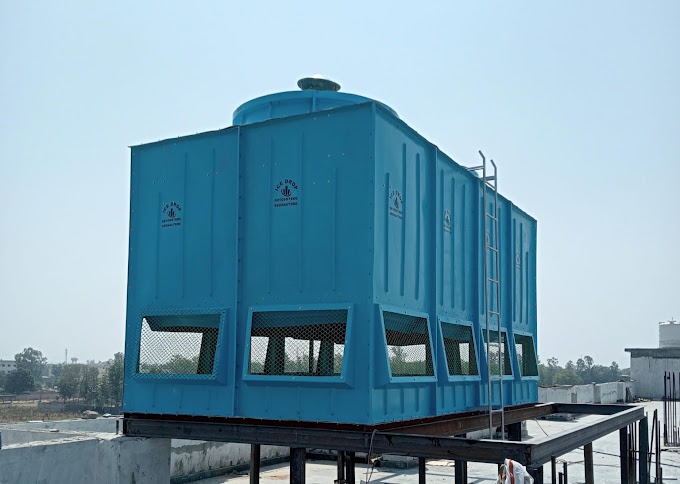
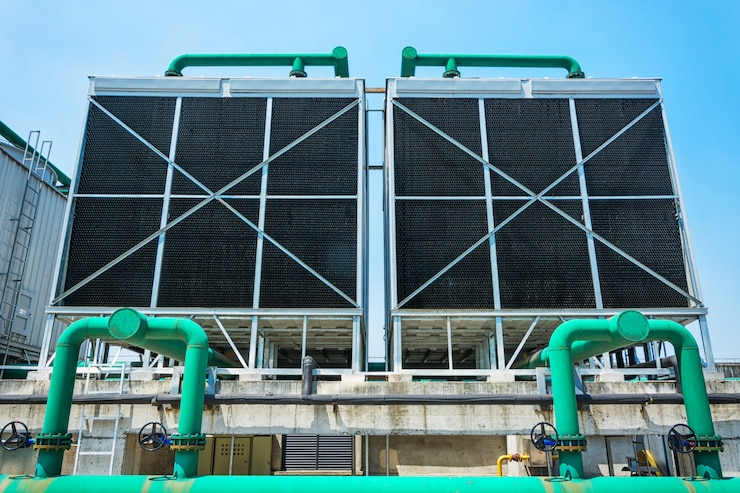
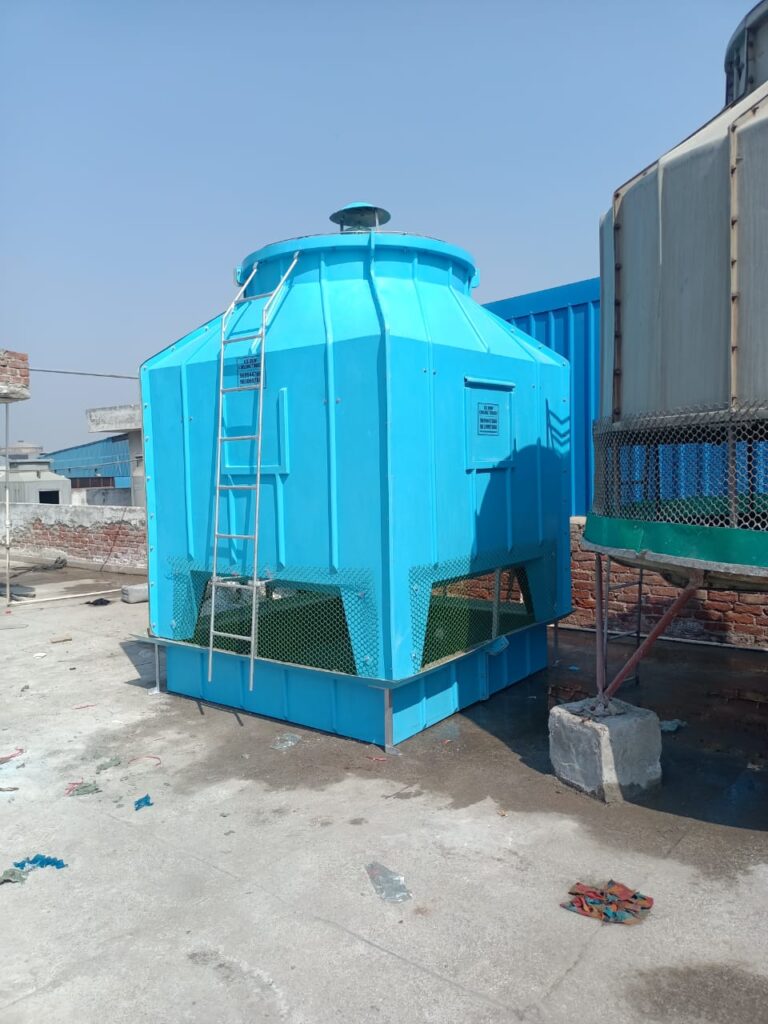
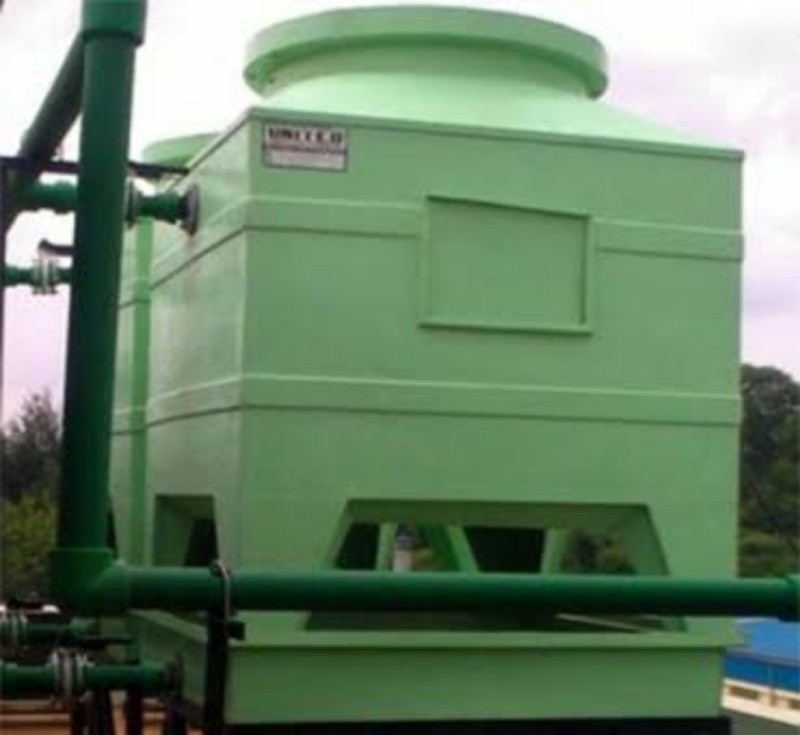
FRP Cooling Towers in Delhi are industrial heat-rejection systems made largely from fiberglass-reinforced plastic. They cool circulating water by transferring heat to moving air, often through evaporation. They are used in manufacturing, HVAC, process industries, and other applications where corrosion resistance, durability, and application-specific cooling capacity are important.
What Is an FRP Cooling Tower?
An FRP cooling tower is a heat-rejection system that uses fiberglass-reinforced plastic (FRP) as a major structural material. It cools warm process water by bringing it into contact with moving air.
During operation, hot water is distributed through the tower. Air passes through the system, allowing a portion of the water to evaporate. This evaporation removes heat, and the cooled water is collected and returned to the industrial process.
FRP is valued in cooling tower construction because it offers good resistance to corrosion and can be suitable for demanding industrial environments when properly designed and maintained.
Why Choose FRP Cooling Towers in Delhi?
Delhi and the surrounding NCR region have a wide range of industrial, commercial, manufacturing, HVAC, and process-cooling applications. These environments can place different demands on cooling equipment.
FRP construction can offer several practical advantages:
- Corrosion resistance: FRP does not rust like conventional steel, making it useful in environments where moisture and chemical exposure are concerns.
- Durable construction: Properly manufactured FRP components can withstand regular industrial operating conditions.
- Relatively low maintenance: The material itself generally does not require the same corrosion-control treatment associated with some metal structures.
- Lightweight construction: FRP components can simplify certain handling and installation requirements.
- Design flexibility: Cooling towers can be configured for different capacities and application requirements.
- Suitable for varied industries: They can be used for process cooling, HVAC systems, manufacturing equipment, and other heat-rejection applications.
However, these benefits do not mean every FRP tower will perform equally. Fan selection, fill material, water distribution, motor efficiency, basin design, and overall engineering also influence performance.
How Does an FRP Cooling Tower Work?
The basic principle is straightforward: heat is transferred from circulating water to the surrounding air.
Warm water enters the tower and is distributed over the fill material. The fill increases the contact area between water and air. At the same time, a fan or natural airflow moves air through the tower.
A small portion of the water evaporates, carrying heat away from the circulating water. The cooled water then collects in the basin and returns to the process or cooling system.
The actual cooling performance depends on several factors, including:
- Entering and leaving water temperatures
- Water circulation rate
- Airflow
- Ambient wet-bulb temperature
- Fill efficiency
- Fan and motor performance
- Tower design and operating conditions
For this reason, cooling tower selection should be based on engineering requirements rather than tower size alone.
Where Are FRP Cooling Towers Used?
FRP cooling towers can serve a variety of industrial and commercial applications. Common examples include:
Manufacturing and Process Industries
Machinery, production lines, compressors, and other equipment may generate significant heat during operation. A properly selected cooling tower can help reject this process heat.
HVAC and Commercial Cooling
Cooling towers may be integrated with water-cooled HVAC systems where heat needs to be transferred from the chilled-water or condenser-water circuit.
Chemical and Process Plants
Corrosion resistance can be an important consideration in industrial environments where moisture or certain chemical conditions may affect conventional materials.
Plastic, Metal and Other Manufacturing Units
Industrial production equipment often requires continuous or controlled cooling. Cooling tower capacity should be matched to the actual heat load and operating cycle.
Key Factors to Consider Before Buying
Choosing an industrial cooling tower involves several technical considerations.
1. Cooling capacity: Determine the actual heat load that needs to be rejected. An undersized tower may struggle to achieve the required outlet temperature.
2. Water flow rate: The tower should be selected according to the required circulating-water flow rather than relying only on nominal capacity.
3. Operating temperatures: Provide the supplier with entering-water temperature, desired leaving-water temperature, and expected ambient conditions.
4. Space availability: Consider the installation footprint, height, access requirements, piping arrangement, and maintenance clearance.
5. Fan and motor selection: For mechanical-draft towers, fan efficiency and motor specifications can affect airflow, energy consumption, and operating reliability.
6. Water quality: Poor water quality can contribute to scaling, fouling, corrosion, and biological growth. A suitable water-treatment and maintenance program is therefore important.
7. Maintenance access: Components such as fills, nozzles, drift eliminators, fans, motors, and basins should be accessible for inspection and servicing.
Maintenance Tips for Better Cooling Tower Performance
Regular maintenance is essential regardless of whether the tower uses FRP, steel, or another construction material.
A practical maintenance program should include:
- Inspecting the fan, motor, and drive system
- Checking water distribution and spray nozzles
- Cleaning or inspecting fill material
- Monitoring basin cleanliness
- Checking for scale and deposits
- Inspecting drift eliminators
- Monitoring water chemistry
- Looking for unusual vibration or noise
- Checking make-up water and blowdown arrangements
- Following the manufacturer’s recommended service intervals
Water treatment deserves particular attention. Even a well-designed tower can experience reduced performance if deposits, contaminants, or biological growth restrict water flow or heat transfer.
How to Select a Cooling Tower Supplier in Delhi
When comparing suppliers, avoid focusing only on the initial purchase price. Ask for technical details that allow you to compare different options fairly.
A reliable supplier should be able to discuss the tower’s capacity, water flow, temperature range, construction materials, fan arrangement, motor specifications, dimensions, installation requirements, and maintenance considerations.
It is also useful to provide complete operating information before requesting a quotation. This allows the manufacturer or supplier to recommend a configuration that is appropriate for the actual application instead of offering a generic model.
For larger industrial installations, professional technical evaluation can help determine whether the proposed cooling tower will meet the required thermal performance under expected operating conditions.
Frequently Asked Questions
What are FRP cooling towers used for?
FRP cooling towers are used to remove heat from circulating water in industrial processes, HVAC systems, manufacturing equipment, and other applications. Their fiberglass-reinforced plastic construction can be particularly useful where corrosion resistance and durable construction are important considerations.
Are FRP cooling towers suitable for industrial applications?
Yes, FRP cooling towers can be suitable for many industrial applications when their capacity and construction are correctly matched to operating conditions. Selection should consider heat load, water flow, temperatures, ambient conditions, water quality, airflow, and available installation space.
How do I choose the right cooling tower capacity?
Start by determining the process heat load, circulating-water flow rate, entering-water temperature, required leaving-water temperature, and design ambient conditions. A cooling tower manufacturer or qualified engineer can then evaluate these parameters and recommend an appropriate configuration.
What maintenance does an FRP cooling tower require?
Routine maintenance generally includes inspecting fans and motors, cleaning the basin, checking water distribution, inspecting fill and drift eliminators, monitoring water quality, and checking for scale or biological growth. The exact maintenance schedule should follow the manufacturer’s recommendations and site operating conditions.
Where can I find FRP cooling towers in Delhi?
FRP cooling towers are available from specialized cooling tower manufacturers and suppliers serving Delhi and the wider NCR industrial market. Before purchasing, compare technical specifications, customization options, installation requirements, after-sales support, and the supplier’s ability to meet your application’s cooling requirements.
Conclusion
Selecting the right FRP Cooling Towers in Delhi requires a clear understanding of the application’s cooling load, water flow, operating temperatures, ambient conditions, space limitations, and maintenance needs. FRP construction can be a practical choice where corrosion resistance and durable industrial performance are important, but the tower’s complete design ultimately determines how well it performs. Before purchasing, compare technical specifications rather than focusing only on the initial price. Share your operating requirements with Ice Drop Cooling Towers so the appropriate capacity and configuration can be evaluated. A properly selected and maintained cooling tower can provide reliable heat rejection while supporting the needs of industrial and commercial operations.