Industrial Applications of Pultruded FRP Cooling Towers in Delhi
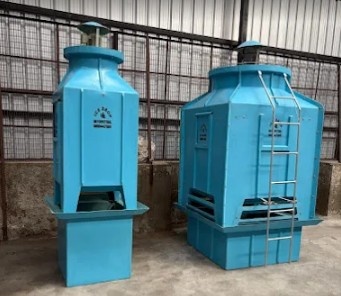
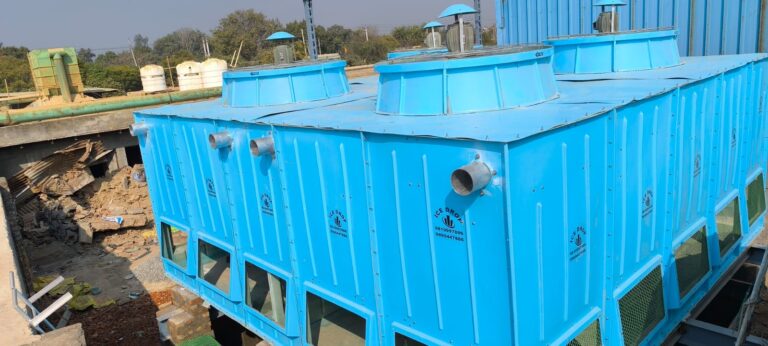
A Pultruded FRP Cooling Tower in Delhi is used across industries that need reliable heat rejection, corrosion resistance, and structural durability. Common applications include HVAC systems, manufacturing plants, power facilities, chemical processing, food and beverage units, and water-intensive industries. Its FRP construction makes it suitable for demanding industrial environments.
What Is a Pultruded FRP Cooling Tower?
A cooling tower removes unwanted heat from industrial process water or HVAC condenser water. The heated water enters the tower, comes into contact with moving air, and transfers heat through evaporation. The cooled water then returns to the process or cooling system.
Pultruded FRP cooling towers use Fiber Reinforced Plastic (FRP) structural components manufactured through the pultrusion process. During pultrusion, reinforcing fibers are pulled continuously through a resin system and heated die, producing consistent structural profiles.
This construction can offer several practical advantages, including:
- Resistance to corrosion and moisture
- High strength-to-weight ratio
- Lower structural maintenance requirements
- Good dimensional stability
- Suitability for humid or chemically exposed environments
- Long service potential with appropriate maintenance
For industries around Delhi, Ghaziabad, Noida, and the wider NCR region, these characteristics can be particularly useful where equipment faces moisture, chemicals, temperature variations, or continuous operating demands.
Industrial Applications of Pultruded FRP Cooling Towers in Delhi
Industrial cooling requirements vary significantly from one facility to another. However, several sectors regularly require dependable heat-rejection systems.
1. Manufacturing and Process Industries
Manufacturing facilities often generate substantial heat through machinery, compressors, hydraulic systems, furnaces, and production processes.
A Pultruded FRP Cooling Tower in Delhi can support process cooling by circulating cooled water through heat exchangers or equipment circuits. The exact tower capacity depends on factors such as heat load, water flow, ambient conditions, and required outlet-water temperature.
Proper sizing is essential. An oversized or undersized tower can affect operating efficiency and overall system performance.
2. Chemical and Process Plants
Chemical processing facilities can expose cooling equipment to aggressive chemicals, vapours, and moisture. Therefore, material selection becomes an important part of cooling tower design.
FRP components offer useful corrosion resistance compared with conventional materials that may deteriorate more quickly in certain environments. However, chemical compatibility should always be evaluated based on the specific chemicals, concentrations, operating temperatures, and resin system involved.
This makes engineering assessment important before installation.
3. HVAC and Commercial Cooling Systems
Cooling towers are not limited to heavy manufacturing. Large commercial buildings, hospitals, hotels, shopping centres, institutional facilities, and data-related infrastructure may use cooling towers as part of water-cooled HVAC systems.
In these applications, the tower helps reject heat collected by the condenser-water loop. A suitable design can contribute to dependable cooling performance while supporting the building’s overall energy-management strategy.
4. Power Generation and Utility Facilities
Power and utility operations require continuous heat management. Cooling towers can form part of systems that reject heat from condensers, auxiliary equipment, compressors, and other thermal processes.
FRP structures can be useful where corrosion resistance and structural durability matter. Nevertheless, facilities with critical cooling loads should consider redundancy, accessibility, water quality, drift control, and maintenance requirements during system planning.
5. Food and Beverage Manufacturing
Food and beverage plants use cooling systems for various processes, including refrigeration support, heat exchangers, compressors, and production equipment.
A cooling tower serving such a facility needs appropriate water treatment and hygiene controls. While the cooling tower itself may operate within a utility system rather than direct food-contact processes, operators must still manage water quality, biological growth, scaling, and corrosion carefully.
Regular inspection helps maintain stable performance.
6. Pharmaceutical and Specialty Manufacturing
Pharmaceutical and specialty manufacturing processes can require controlled environmental and process conditions. Cooling systems may support chillers, HVAC equipment, process heat exchangers, and utility operations.
Here, reliable temperature control and consistent equipment performance are important. Cooling tower selection should therefore consider the facility’s heat load, water chemistry, operating schedule, and applicable quality and safety requirements.
Why FRP Construction Matters in Delhi NCR
Delhi NCR contains a diverse industrial base, from manufacturing and engineering facilities to commercial infrastructure. Cooling equipment may encounter dust, humidity, changing weather conditions, and water-quality challenges.
Pultruded FRP profiles can provide a useful combination of structural strength and corrosion resistance. Moreover, their relatively low weight can simplify certain handling and installation requirements.
However, material alone does not determine cooling tower performance. Fan selection, fill design, airflow, water distribution, basin configuration, motor efficiency, drift control, and water treatment all influence the final result.
Key Factors to Consider Before Choosing a Cooling Tower
Before purchasing a cooling tower, facility managers should evaluate the complete operating requirement rather than selecting equipment solely on nominal capacity.
Heat Load and Water Flow
Determine the actual heat rejection requirement and circulating-water flow. The tower should match the process conditions rather than relying on a generic tonnage figure.
Ambient Conditions
Delhi’s seasonal temperature variations can affect cooling performance. Design conditions should account for the expected entering-air temperature, humidity, and required cold-water temperature.
Water Quality
Hardness, dissolved solids, suspended matter, and biological contamination can influence scaling, fouling, and corrosion. A suitable water-treatment program is therefore essential.
Maintenance Access
Choose a design that allows practical access to fans, motors, fill media, nozzles, eliminators, basins, and other serviceable components. Easy inspection can reduce avoidable downtime.
Energy Consumption
Fan and pump power contribute to operating costs. Efficient equipment selection and appropriate controls can help improve the overall lifecycle economics of the cooling system.
Maintenance Practices for Industrial Cooling Towers
Even a robust cooling tower needs systematic maintenance. Operators should establish a schedule based on manufacturer recommendations and actual site conditions.
Important practices include:
- Inspecting fans, motors, shafts, and drive components
- Checking water distribution and spray nozzles
- Cleaning basins and removing accumulated debris
- Monitoring water chemistry
- Inspecting fill media and drift eliminators
- Checking for unusual vibration or noise
- Reviewing water levels and circulation
- Maintaining appropriate biological control measures
Additionally, cooling towers should be managed with attention to Legionella risk and applicable local occupational or public-health guidance. Water-system management should form part of the facility’s broader maintenance and safety program.
Choosing the Right Pultruded FRP Cooling Tower in Delhi
The best cooling tower is not necessarily the largest or most expensive option. It is the system that matches the site’s thermal requirements, environmental conditions, water chemistry, available space, maintenance strategy, and operating budget.
When evaluating a Pultruded FRP Cooling Tower in Delhi, ask the supplier for relevant technical information such as cooling capacity, water flow rate, design conditions, fan specifications, motor details, materials, dimensions, and maintenance requirements.
A technically sound supplier should also help assess whether the proposed tower fits the existing process rather than simply recommending a standard model.
Conclusion
Pultruded FRP cooling towers can serve a wide range of industrial applications, including manufacturing, chemical processing, HVAC, utilities, food and beverage production, and specialty facilities. Their corrosion-resistant FRP construction can be particularly valuable in demanding operating environments. However, dependable performance depends on correct sizing, airflow, water distribution, water treatment, and regular maintenance—not simply the tower material. If you are evaluating a Pultruded FRP Cooling Tower in Delhi, start by defining your heat load and operating conditions, then compare technically suitable options. Contact IceDrop Cooling Towers to discuss your industrial cooling requirements and identify a suitable solution for your facility.